





Session Abstract – PMWC 2027 Silicon Valley

Track Chair:
William Oh, Yale
PMWC Award Ceremony
• Nigam Shah, Stanford
• Thomas Fuchs, Lilly
Keynote: Responsible AI in Healthcare: From RWE to Agentic Systems
• Nigam Shah, Stanford
Keynote: Scaling Trusted AI: From Computational Pathology to Next-Gen Medicines
• Thomas Fuchs, Lilly
Real-World Evidence & Clinical AI: Closing the Loop Between Data and Care
• Chair: Roxana Daneshjou, Stanford
• Aashima Gupta, Google
• Brigham Hyde, Atropos Health
• Michael Pfeffer, Stanford
• Thomas Fuchs, Lilly
From Data to Decisions: Building Regulatory-Grade RWE from EHR Systems in Oncology
• Chair: Nadia Poluhina, Mayo Clinic
• Kate Estep, Flatiron Health
• Alyssa Pybus, Moffitt Cancer Center
• Julie Stein Deutsch, Johns Hopkins
• Jeremy Jones, Mayo Clinic
Predicting Outcomes: An AI Model Trained on RWE for Precision Care
• Rich Gliklich, OM1
AI for Clinical Decision Support: From Models to Bedside
• Chair: Amrita Basu, UCSF
• Anurang Revri, Stanford
• Emily Alsentzer, Stanford
• Okan Ekinci, Roche
Keynote: AI for CDS-From Models to Bedside
• Zachary Ziegler, OpenEvidence
Operationalizing AI in Health Systems: Trust, Adoption & Outcomes
• Chair: Danton Samuel Char, Stanford
• Karan Singhal, OpenAI
• Sina Bari, iMerit Technology
• Shashi Shankar, Novellia
• Elena Ikonomovska, diadia Health
• Syed Mohiuddin, Anthropic
Safe, Scalable AI in Clinical Practice: What’s Working and What’s Not
• Chair: Travis Zack, OpenEvidence
• Vincent Liu, Kaiser
• Richard Milani, Sutter Health
Transforming Transplant Care Through AI: From Predictive Insights to Precision Decisions
• Jing Huang, CareDx
AI for Precision Psychiatry: Integrating Multimodal Data Into Clinical Decision Support
• Erwin Estigarribia, HEADLAMP health
Workflow-First Clinical AI: Integration Patterns, Guardrails & Change Management
• Jorge Durand, Klick Health
From Patient-Generated Data to Regulatory-Grade RWE: Design, Bias & Outcome Linkage
• Phil Johnson, Evidation
Speaker Profile
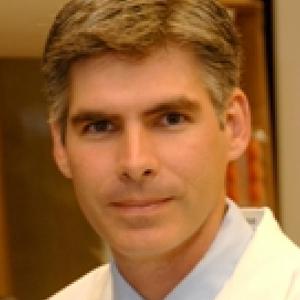

Ph.D., Professor, U of Pennsylvania
Biography
Dr. Daniel J. Powell Jr. is a leading translational immunologist whose work has helped shape the development of cancer immunotherapy, particularly for gynecologic malignancies and other solid tumors. As a faculty member at Penn Medicine, he has played a central role in advancing immune-based approaches that move beyond conventional treatment strategies, with an emphasis on therapies that can be both mechanistically rational and clinically actionable. His lab is known for combining rigorous basic science with a clear translational mission, creating a research program that is deeply rooted in tumor immunology while remaining focused on the needs of patients with difficult-to-treat cancers.
A major strength of Dr. Powell’s program is its breadth across the immunotherapy pipeline. His team has contributed to the development and refinement of adoptive cell therapies, including CAR T cell and T cell receptor-based strategies, as well as cancer vaccination and other immune-directed approaches designed to improve anti-tumor activity in solid tumors. This work has been especially important in cancers such as ovarian and other gynecologic malignancies, where durable responses to immunotherapy remain challenging and where new biological insights are urgently needed. By pursuing both discovery and translation, the lab has helped define new therapeutic concepts while also testing how those concepts can be brought into the clinic.
Speaker Profile
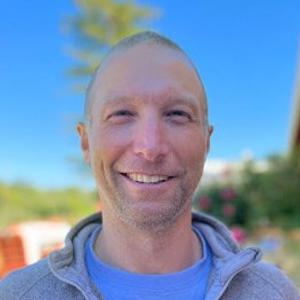

M.D., Co-Director, Stanford
Biography
Danton Char is a pediatric cardiac anesthesiologist, clinical researcher, and empirical bioethics researcher at Lucile Packard Children's Hospital and Stanford University. He focuses on improving the lives of infants, children, and adults with complex congenital cardiac disease and supporting the well-being of their caregivers and families. His research also focuses on identifying and addressing ethical concerns arising with implementation of next generation technologies to bedside clinical care for all patients, including genomic testing, artificial intelligence/machine learning, and mechanical circulatory support.
Speaker Profile
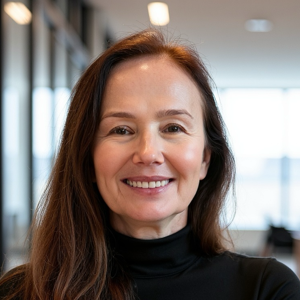

Ph.D., Sr. Director, Pfizer
Biography
Dr. Jadwiga Bienkowska is a Head of Computational Biology at Pfizer, Oncology Research and Development. Dr. Bienkowska has over 20 years of experience working in Pharma and Biotech. Over her career she has built and led teams of biologists, data scientists and engineers applying at-scale Computation, Machine Learning and AI to drug development problems. At ORD Dr. Bienkowska focuses on development of breakthrough therapies for Cancer. Dr. Bienkowska’s team works with biologists and clinicians on decoding multimodal data into interpretable models of mechanisms driving cancer progression and resistance to treatment. Insights generated by these models accelerate drug development through new target discovery, MOA studies, patient, and biomarker selection strategies. Dr. Bienkowska contributed to development of therapies for Cancer, Neurological and Immune diseases.
Speaker Profile


AI Researcher, Google Health
Biography
Vivek Natarajan is a Research Scientist at Google DeepMind leading research at the intersection of AI, science and medicine. In particular, Vivek was the lead researcher behind Med-PaLM and Med-PaLM 2, which were the first AI systems to obtain passing and expert level scores on US Medical License exam questions respectively. Med-PaLM was published in Nature in 2023 and has been featured in The Scientific American, Wall Street Journal, The Economist, STAT News, CNBC, Forbes, New Scientist among others. Vivek co-leads Project AMIE with Dr Alan Karthikesalingam at Google, a research effort aiming to build and democratize conversational, multimodal, diagnostic and empathetic medical super intelligence. Two papers from Project AMIE were recently published in Nature with the AI system surpassing primary care physicians in performing medical consultations in simulated settings. Finally, Vivek recently co-led the development of the AI co-scientist, a system designed to be a virtual AI collaborator for scientists. Outside of Google, Vivek is also part of the faculty for executive education at Harvard T.H. Chan School of Public Health in a part-time capacity.
Speaker Profile
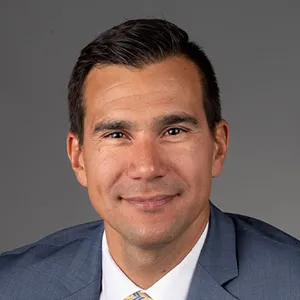

M.D., CEO, Coalition for Health AI (
Biography
Brian Anderson, MD (Harvard) is the chief executive officer and co-founder of the Coalition for Health AI (CHAI), a non-profit coalition. CHAI is focused on developing a set of consensus-driven guidelines and best practices for Responsible AI in Health, as well as supporting the ability to independently test and validate AI for safety and effectiveness. Previously, he was the chief digital physician at MITRE, where he led work during the COVID-19 pandemic, working closely with the White House COVID-19 Task Force and Operation Warp Speed. He also led MITRE’s largest R&D effort in oncology, focusing on the development of mCODE. Anderson is an international author and speaker with expertise in digital health. He has also served on national and international health information technology committees in partnership with the Office of the National Coordinator (ONC), the National Institutes of Health (NIH), and the Organization for Economic Cooperation and Development (OECD).
Speaker Profile
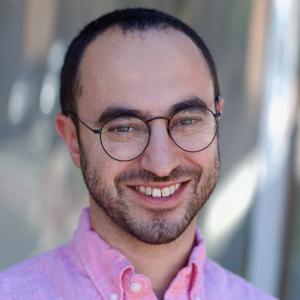

M.D., Lead, Duke
Biography
Mark is the Co-Founder and CEO of Vega Health and the co-lead of Health AI Partnership. His work focuses on advancing the safe and effective use of AI in community and rural settings. He spent nearly 11 years at Duke leading interdisciplinary teams of data scientists, clinicians, and machine learning experts to build technologies that solve real clinical problems. Together with the DIHI team, he has integrated dozens of data-driven technologies into clinical operations. Mark has published over 60 manuscripts in top technical, clinical, and management venues and while at Duke secured over $12 million in external grant funding from government, philanthropic, and industry sources. He obtained his Bachelor’s of Science in Mathematics from UCLA, where he was awarded the Charles E. Young Humanitarian Award, the top honor for community service, and his MD and Masters of Public Policy at Duke University as a Dean’s Tuition Scholar.
Speaker Profile
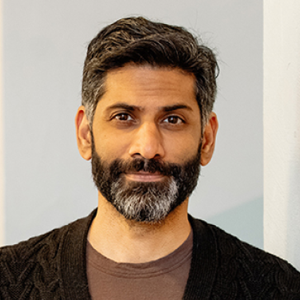

M.D., Founder & CEO, Abridge
Biography
Shiv Rao, MD, is the Founder and CEO of Abridge. Shiv is a practicing cardiologist at UPMC. He previously led the provider-facing investment portfolio for UPMC where he invested in startups, and also helped fund a Machine Learning in Health program at Carnegie Mellon University.
Speaker Profile
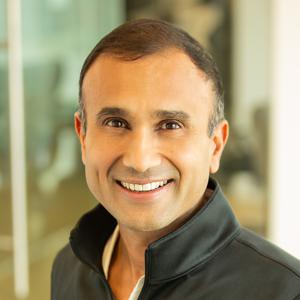

Co-Founder & CEO, Hippocratic AI
Biography
Munjal Shah is the co-founder and CEO of Hippocratic AI,
A generative artificial intelligence startup focused on building foundation models for health care and using it to improve patient outcomes, lower health care costs, and address the growing shortage of health care workers worldwide.
Founded by generative AI researchers, hospital administrators, physicians, and Medicare experts, Hippocratic AI has developed a safety-focused large language model to provide nondiagnostic health care services. Its large language model outperformed Open AI’s GPT-4 on 105 of 114 health care exams and certifications. Hippocratic AI has received a total of $120M in funding and is backed by leading investors, including General Catalyst, Andreessen Horowitz, Premji Invest, and SV Angel.
Read more and stay up to date on his latest AI research at munjalshah.com
Speaker Profile
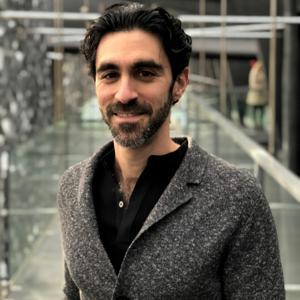

Chief Scientist, Dandelion Health
Biography
Ziad Obermeyer is Associate Professor and Blue Cross of California Distinguished Professor at UC Berkeley. His research uses machine learning to help doctors make better decisions, and help researchers make new discoveries—by ‘seeing’ the world the way algorithms do. His work on algorithmic racial bias has impacted how many organizations build and use algorithms, and how lawmakers and regulators hold AI accountable. He is a cofounder of Nightingale Open Science and Dandelion Health, a Chan Zuckerberg Biohub Investigator, a Faculty Research Fellow at the National Bureau of Economic Research, and was named an Emerging Leader by the National Academy of Medicine. Previously, he was Assistant Professor at Harvard Medical School, and continues to practice emergency medicine in underserved communities.
Speaker Profile
Chief Data and Technology Officer, Critical Path Inst.
Biography
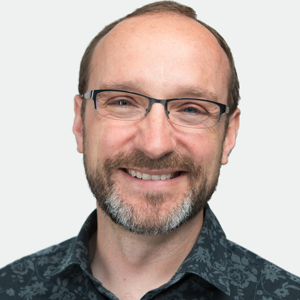
Chris is the Chief Data and Technology officer at the Critical Path Institute, a public-private partnership working with regulators to accelerate the approval of new therapies. Previously he was the CTO for the All of Us Research Program at the NIH. Chris leads a science book club currently reading "The Great Math War".
Speaker Profile
M.D., CEO, All of Us, NIH
Biography
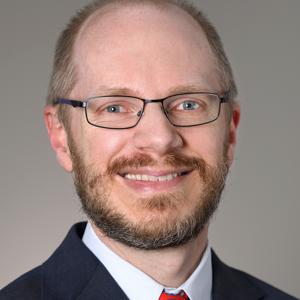
Dr. Josh Denny, M.D., M.S., is the Chief Executive Officer of the National Institutes of Health’s All of Us Research Program, a nationwide health research program that has already enrolled more than 881,000 participants. All of Us has created one of the world’s largest biomedical data sets that more than 23,000 researchers use to improve medical care through personalized insights and scientific discovery.
Prior to joining NIH in 2020, Dr. Denny held leadership positions at Vanderbilt University Medical Center, where he pioneered the use of electronic health records for genomics studies, including phenome-wide association studies and clinical pharmacogenomics. He previously led the All of Us Data and Research Center. He is an elected member of the National Academy of Medicine, the American Society for Clinical Investigation, and a fellow of the American College of Medical Informatics. Dr. Denny has authored over 400 peer-reviewed publications.
Talk
N/A
N/A