
Speaker Profile
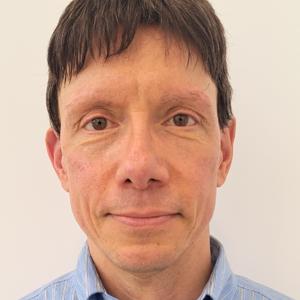

Ph.D., Principal Investigator, Altos Labs
Biography
Dr. Steve Horvath is a geroscientist and computational biologist best knownfor developing the epigenetic clock, a groundbreaking biomarker thatmeasures biological aging based on DNA methylation patterns. His work hastransformed aging research, enabling precise tracking of aging-relatedinterventions and influencing diagnostics, longevity science, and precisionmedicine. Dr. Horvath has led key studies linking epigenetic ageacceleration to disease risk and mortality, paving the way for potentialanti-aging therapies. He has held leadership roles in major scientificinitiatives and has received numerous honors, including election to the Academy for Health Lifespan Research, as well as the Nathan W. Shock Award for aging research. His contributions continue to shape the future ofaging and longevity research, with broad applications in medicine andbiotechnology.
Session Abstract – PMWC 2026 Silicon Valley

Track Chair:
Michael Goldman, SFSU
PMWC Award Ceremony
• David Sinclair, Harvard
• Steve Horvath, Altos Labs
• Nir Barzilai, Albert Einstein College of Medicine
AI-Driven Biomarkers to Quantify Aging
• Chair: Alex Zhavoronkov, Insilico Medicine
• Mahdi Moqri, Harvard
• Steve Horvath, Altos Labs
• Hussain Ahamed, Ultrahuman
Epigenetic Aging Signatures in Large Human Cohorts
• Varun Dwaraka, TruDiagnostic
AI Systems for Personalized Longevity: How Biomarkers Translate into Actionable Interventions
• Chair: Nathan Price, Buck Institute
• Sherry Zhang, Buck Institute
• Ranjan Sinha, Digbi Health
• Zeenia Framroze, Alethios, Inc.
• John Ramunas, Rejuvenation Technologies
Clinical Trial Design & Functional Endpoints for Healthspan
• Nir Barzilai, Albert Einstein College of Mediciney
The data We Need For AI To Accelerate Longevity Drugs
• Martin Jensen, Gordian Biotechnology
From Genome to an AI-Drive Longevity Platform
• Wei-Wu He, Human Longevity
Wellness Wearables: The Journey to Clinical
• Hussain Ahamed, Ultrahuman
Longevity Medicine: Ambition vs Evidence in the Era of Precision Health
• Aubrey de Grey, LEV Foundation
Precision Aging & Longevity Focused on Limited Lifespan Evidence, Vanishing Blue Zones, and Payer ROI
• S. Jay Olshansky, University of Illinois
Evolutionary perspectives on human lifespan and healthspan
• Michael Gurven, UC Santa Barbara