
Speaker Profile
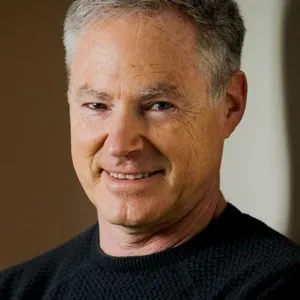

M.D., Ph.D., CSO, Microsoft
Biography
Eric Horvitz, MD, PhD, is Chief Scientific Officer at Microsoft where he leads initiatives at the intersection of science, technology, and society, with emphases on artificial intelligence, biosciences, and healthcare. His research contributions have advanced AI through innovations in perception, reasoning, and decision-making under uncertainty. Dr. Horvitz is known for his contributions to AI theory and practice, with a focus on principles and applications of AI amidst the complexities of the open world. His direction-setting research efforts include harnessing probability and utility in machine learning and reasoning, developing models of bounded rationality, constructing systems that perceive and act via interpreting multisensory streams of information, and pioneering principles and mechanisms for supporting human-AI collaboration and complementarity. His efforts and collaborations have led to fielded systems in healthcare, transportation, ecommerce, operating systems, and aerospace. Beyond his scientific work, he has pursued programs, organizations, and studies on ethics, values, and safety with applications and influences of AI. He founded and chairs Microsoft’s Aether committee on AI, effects, and ethics in engineering and research. He established the One Hundred Year Study on AI at Stanford University and co-founded and served as board chair of the Partnership on AI (PAI). He served as a Congressionally appointed commissioner on the National Security Commission on AI, where he chaired the line of effort on ethical and trustworthy AI. Dr. Horvitz received the Feigenbaum Prize and the Allen Newell Prize for his fundamental contributions to the science and practice of AI. He received the CHI Academy honor for his work at the intersection of AI and human-computer interaction. He has been elected fellow of the National Academy of Engineering (NAE), the Association of Computing Machinery (ACM), Association for the Advancement of Artificial Intelligence (AAAI), the American Association for the Advancement of Science (AAAS), the American Academy of Arts and Sciences, the American College of Medical Informatics, and the American Philosophical Society. Dr. Horvitz currently serves on the advisory boards of the Allen Institute for AI (Ai2) and Stanford’s Institute for Human-Centered AI (HAI). He served as a member of the President’s Council of Advisors on Science and Technology (PCAST), president of the AAAI, as a member of the Computer Science and Telecommunications Board (CSTB) and Computing Community Consortium (CCC), and on advisory committees for the National Science Foundation (NSF), National Institutes of Health (NIH), and Defense Advanced Research Projects Agency (DARPA). He received Ph.D. and M.D. degrees at Stanford University. Before moving into the role of Chief Scientific Officer, he served as director of Microsoft Research overseeing research labs in Redmond, Washington; Cambridge, Massachusetts; New York City, New York; Montreal, Canada; Cambridge, United Kingdom; and Bangalore, India.
Session Abstract – PMWC 2026 Silicon Valley
Track Chair:
Sharat Israni, UCSF
PMWC Award Ceremony
• Regina Barzilay, MIT
• Joe Petro, Microsoft
• Curtis P. Langlotz, Stanford University
Keynote: The Future of AI in Medical Imaging
• Curtis P. Langlotz, Stanford University
From Foundation Models to Digital Twins: AI Reshaping Clinical Imaging
• Chair: Alexander Weir, Canon Medical
• Regina Barzilay, MIT
• Kevin Blyth, University of Glasgow
• Curtis P. Langlotz, Stanford University
Fireside Chat
• Eric Horvitz, Microsoft
• Curtis P. Langlotz, Stanford University
Getting Real Results from AI
• Martin Stumpe, Danaher
Keynote: AI Tools for Cancer Diagnostics and Treatment
• Regina Barzilay, MIT
From Multimodal Data to Clinical Digital Twins: Linking Imaging, Omics, and Decisions
• Stephen Quake, Stanford
AI & Omics Foundation Models Powering Translational Research
• Chair: Janusz Dutkowski, Data4Cure
• Alex Moreau, Champions Oncology
• Jadwiga Bienkowska, Pfizer
AI-Enhanced Imaging: Radiomics, Radiogenomics, and Simulation
• Chair: Chris Hare, Canon Medical
• Ángel Alberich-Bayarri, Quibim
• Kevin Blyth, University of Glasgow
• Maria del Mar Alvarez-Torres, Columbia University
Clinical Workflow Integration & Decision Support in Imaging
• Chair: Sharat Israni, UCSF
• David S. Liebeskind, UCLA
• Rajesh Shah, UCSF
• Roxana Daneshjou, Stanford University
• Mohammad Alexanderani, U Pitt
• Orly Ardon, Memorial Sloan Kettering Cancer Center
AI-Powered Serverless HPC for Scientific Discovery
• Fengbo Ren, Fovus
Davos of Precision Medicine
PMWC 2027 Program
January 27–29, 2027 · Santa Clara Convention Center
Swipe speakers · Tap a card for sessions →
In a few words.
PMWC is indeed The Davos of Biotech