
Speaker Profile
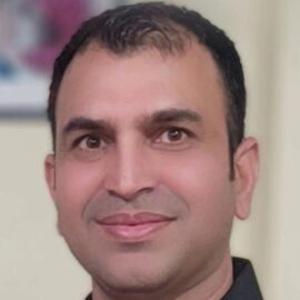

Ph.D., Senior Genomics/AI/ML Scientist, NVIDIA
Biography
Pankaj Vats, PhD, is a senior genomics and AI scientist with NVIDIA Clara Parabricks, where he advances GP Uaccelerated genomics for research and clinical use. He designs and validates deep learning methods for large, heterogeneous genomic datasets, with a focus on cancer genomics, structural variation, and liquid biopsy. His work includes DeepSAP, a transformer-based RN Aseq alignment workflow that improves detection of complex splice junctions. He also led development of MambaSV, a sequence statespace model for resolving structural variants. In liquid biopsy, he integrates AI models with cfDNA and RNA assays to enhance early cancer detection, minimal residual disease monitoring, and treatment response assessment. Operating at the intersection of AI, highperformance computing, and precision oncology, he helps translate foundation models, longcontext architectures, and AI driven genomics methods into scalable tools for diagnostic labs, biopharma partners, translational research labs, and the broader genomics research community.
Session Abstract – PMWC 2026 Silicon Valley
Track Chair:
Victor Velculescu, Johns Hopkins University
PMWC Award Ceremony
• Daniel De Carvalho, University of Toronto
From Mutation to Methylation: The Next Wave of Liquid Biopsy Biomarkers
• Chair: Victor Velculescu, Johns Hopkins University
• Daniel De Carvalho, University of Toronto
• Stephen Master, CHOP/U Penn
• Gordon Sanghera, Oxford Nanopore Technologies
Advancing Minimal Residual Disease Detection Through cfDNA & cfRNA Profiling
• Chair: Luis Diaz, Memorial Sloan Kettering Cancer Center
• Anne-Renee Hartman, Adela
• Minetta Liu, Natera
• Rita Shaknovich, Agilent
• Ajay Gannerkote, Integrated DNA Tech
AI-Informed Biomarker Trials: Turning Early Signals into Actionable Designs
• Chair: Manish Kohli, University of Utah
• Eric Klein, GRAIL
• Sarah Moseley, DELFI Diagnostics
• Samuel Levy, ClearNote Health
Role of AI in Liquid Biopsies & Cancer Detection
• Chair: Amoolya Singh, DELFI Diagnostics
• Ron Andrews, Dxcover
• Pankaj Vats, NVIDIA
• Paul Shi, Amgen
• Christopher Troll, Claret Bioscience
Integrating Genetic Risk with Early Detection: A Precision Prevention Framework for Cardiovascular Disease
• Paolo Di Domenico, Allelica
AI-Driven Metagenomic and Host RNA Profiling for Precision Diagnosis of Infections
• Charles Chiu, UCSF
AI-Driven Host–Pathogen Signatures from Plasma cfDNA: Bridging Infection Biology and Early Diagnostics
• Sivan Bercovici, Karius
Ultra-Sensitive Multimodal Liquid Biopsy for Early Cancer Detection: AI-Driven Signal Profiling
• John Sninsky, CellMax Life
Overcoming Limits of Traditional cfDNA Assays Using Active Chromatin
• Diana Abdueva, Aqtual
Whole-genome methylome-based early cancer signal detection
• Sally Mackenzie, EpiMethyl Analytics
BrainSee Sees the Brain: FDA-Approved AI for Predicting Modifiable Risk of Developing Alzheimer’s Within Five Year
• Padideh Kamali-Zare, Darmiyan
Davos of Precision Medicine
PMWC 2027 Program
January 27–29, 2027 · Santa Clara Convention Center

Swipe speakers · Tap a card for sessions →
In a few words.
PMWC is indeed The Davos of Biotech