Speaker Profile
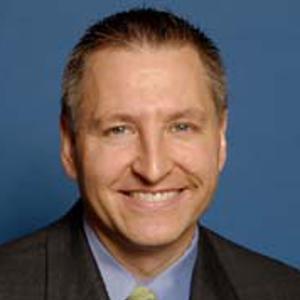
Chief Policy Officer & VP Science Policy and Government Affairs, AACR
Biography
Jon Retzlaff oversees the government affairs, science policy, and patient advocacy activities for the A ACR in Washington, D. C. In this role, he works closely with the A ACR Science Policy and Government Affairs Committee to devise and implement strategies to influence important biomedical research-related policy issues with the goal of accelerating the prevention and cure of all cancers. Previously, he worked on Capitol Hill and held senior roles at the National Institutes of Health (NIH), the Federation of American Societies for Experimental Biology (FASEB), and a government relations advocacylobbying firm.
Talk
Shifting Federal Policies: Responding to Trump Administrations Changes
This session will explore how the medical research and patient care community can navigate the evolving landscape of healthcare policy, research funding, regulatory oversight, and public health priorities under the Trump Administration. As federal priorities shiftincluding changes to NIH funding, FDA regulations, and public health initiativesresearchers, institutions, and policymakers must adapt strategically to sustain innovation.
Non-Clinical Services Showcase:
AACR
AACR is the first and largest organization in the world dedicated to accelerating advances against cancer through high-impact cancer science and medicine. AACR's 60,000+ membership has been at the forefront of every major advance against this disease, united by one mission: to prevent and cure all cancers.
Session Abstract – PMWC 2026 Silicon Valley

The PMWC 2026 Non-Clinical Services Showcase will provide a 15-30 min speaking opportunity for selected companies working with the latest technologies in nucleic acid sequencing such as NGS, providing instrumentation for genomic sequencing, and offering direct to consumer services. These companies will share their innovative products and services to an audience of leading investors, potential clients and partners. The Genomic Profiling Showcase will exhibit the latest innovations in methods and instruments used for DNA/ RNA sequencing to ascertain the genomic and transcriptional profile of a person in order to understand why some people get certain diseases while others do not, or why people react in different ways to the same drug. This information is also being used to develop new ways to diagnose, treat, and prevent diseases, such as cancer.
Davos of Precision Medicine
PMWC 2027 Program
January 27–29, 2027 · Santa Clara Convention Center

Swipe speakers · Tap a card for sessions →
In a few words.
PMWC is indeed The Davos of Biotech