Speaker Profile
Biography
Dimitri Yatsenko is the scientific lead behind DataJoint, an open-source framework widely adopted across neuroscience for building reproducible, scalable, and fully automated data pipelines. Originally developed during his work at Baylor College of Medicine, DataJoint has become foundational infrastructure for labs generating large-scale electrophysiology, imaging, behavioral, and multimodal datasets. Dimitris work focuses on transforming fragmented research workflows into unified, auditable systems that integrate data acquisition, analysis, and computational modeling. Over more than a decade, he has championed data-centric research practices that accelerate discovery, improve scientific rigor, and enable collaborative, multi-institution neuroscience projects. His contributions have helped establish best practices for managing complex experimental data and have empowered researchers to connect raw measurements to higher-order insight with speed, transparency, and reproducibility.
Talk
Precision Pipelines: Accelerating Epilepsy Translation with DataJoint
Discover how the Cadwell Lab (UCSF) leverages DataJoint to power translational research for drug-resistant epilepsy. Learn how automated precision pipelines aim to unify multi-scale dataspanning single-cell genomics, physiology, morphology, and circuit models of human tissueto accelerate the development of novel regenerative cell therapies.
AI and Data Sciences Showcase:
Datajoint Inc.
DataJoint is a research-data platform that transforms fragmented lab workflows into automated, reproducible, and scalable data pipelines, enabling faster, reliable scientific discovery across modalities.
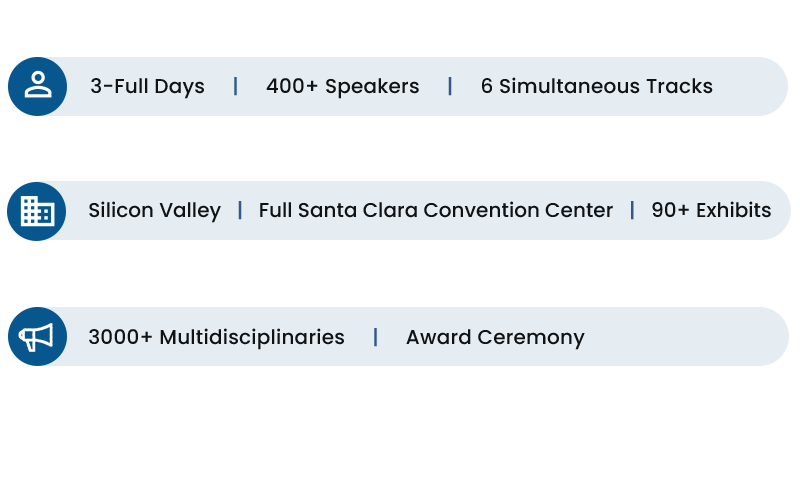
Session Abstract – PMWC 2026 Silicon Valley
The PMWC 2026 AI Company Showcase will provide a 15-30 minute time slot for selected AI companies to present their latest technologies to an audience of leading investors, potential clients, and partners. We will hear from companies building technologies that expedite the pre-clinical and clinical drug discovery and development process, accelerate patient diagnosis and treatment, or develop scalable systems framework to make AI and deep/machine learning a reality.