Session Abstract – PMWC 2026 Silicon Valley

The PMWC 2026 AI for Emerging Therapeutics Showcase will provide a 15-30 minute time slot for selected companies to explore the transformative role of artificial intelligence in accelerating the discovery, development, and optimization of novel therapeutic modalities. From predictive algorithms for drug efficacy to real-time analysis in clinical trials, AI is revolutionizing the way we approach emerging therapies, including RNA-based treatments, gene editing, and personalized medicine. Industry leaders and experts will discuss AI-driven advancements, collaborative frameworks, and the challenges of integrating cutting-edge technologies into therapeutic innovation. Join us for an in-depth look at how AI is shaping the future of breakthrough therapeutics.
Confirmed Presenting Companies:





Speaker Profile
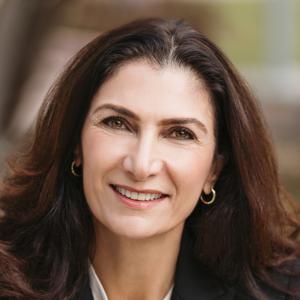
Ph.D., CEO, Therna Biosciences
Biography
Dr. Azimi is the co-founder and CEO of Therna Biosciences, a company that is leveraging its proprietary AI-models for RNA design to develop transformative RNA medicines for a variety of diseases. Prior to Therna Biosciences, she was the founder and CEO of Bioniz Therapeutics and Dermaheal, two biotech companies focused on immunological diseases. Dr. Azimi started her journey at the NIH as a post-doctoral fellow in immunology. She is interested in the intersection of science, strategy, and execution, building biotech companies from the ground up and helping teams translate innovation into outcomes.
Talk
RNA Design by Intelligent Design
Using a biology-guided, AI-powered platform, Therna is pioneering programmable RNA therapeutics. Therna’s technology is engineered to enhance translation, durability, and precise tissue targeting, which unlocks new levels of safety and efficacy in RNA medicines.
AI for Emerging Therapeutics Showcase:
Therna Biosciences
AI/ML Powered RNA Medicines Therapeutics Company.
Speaker Profile

Ph.D., MBA, Professor/CEO, OHSU/PDX Pharma
Biography
Dr. Wassana Yantasee received her PhD in Chemical Engineering and MBA from Oregon State University in 2001. She has served as a principal investigator on numerous NIH-SBIR projects focusing on nano-based combination therapy and immunotherapy by applying her versatile delivery platform, Pdx-NP, to develop various cancer therapeutics and vaccines. Dr. Yantasee has received multiple honors, including the Ronald L. Brodzinski Early Career Scientific Achievement Award, the Council of Outstanding Early Career Engineer Award, and corporate philanthropy awards. She was inducted into the National Academy of Inventors and is a Fellow of the American Institute for Medical and Biological Engineering. She has published more than 70 peer-reviewed papers, is an inventor on over 50 patent applications, and has served on more than 40 scientific review panels for federal grant programs.
Talk
Nano-Delivery Platform for Rapid Drug Development
AI is transforming drug discovery by rapidly identifying promising targets. However, many targets are not druggable, and multiple pathways often need to be targeted simultaneously for a lasting response. The Pdx-NP platform is capable of delivering multiple types of drugs to both cancer cells and immune cells, helping to realize the promise of AI.
AI for Emerging Therapeutics Showcase:
OHSU/PDX
PDX Pharmaceuticals, in collaboration with Oregon Health & Science University (OHSU), has received multiple NCI awards and investments to advance five cancer drug candidates based on its Pdx-NP platform for delivering synergistic drug cargos. This work has led to numerous high-impact publications, more than 40 patent applications, and the training of many next-generation cancer researchers.
Speaker Profile
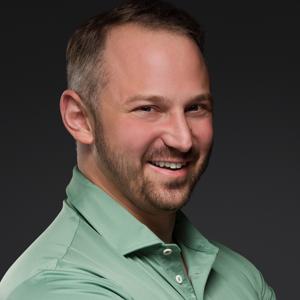
CEO, Ordaos
Biography
David Longo is the Founder and Chief Executive Officer (CEO) of Ordaōs. As CEO of Ordaōs, Longo leads a strong scientific team to design novel mini-proteins that help drug hunters deliver safer and more effective treatments. Longo brings to Ordaōs, broad experience in innovation and technology, that compel him to approach protein design in a unique way. His expertise in AI and machine learning is incorporated into Ordaōs Design Engine, driving the rapid creation of never-before-seen mini-proteins with improved probability of more therapeutically effective candidates. Prior to Ordaōs, this entrepreneur led a series of companies which he grew into successful entities. Longo has a Master's in Biotechnology from Harvard University, graduate certificates in AI, Machine Learning, Innovation and Technology from Stanford University and Massachusetts Institute of Technology (MIT), and a masters Certificate in Music Production from Berklee College of Music.
Talk
Adversarial Harmony: The Skeptical Symphony of Biologics Design
This talk explores the Ordaos Design Engine's "skeptical symphony." By orchestrating hundreds of adversarial AI models grounded in diverse physical principles, we ruthlessly challenge every design assumption. This rigorous internal conflict forces consensus across varied datasets, ensuring generalizability and delivering robust, developable biologics that survive the skepticism of nature.
AI for Emerging Therapeutics Showcase:
Ordaos
Ordaos Bio is a techbio company that reimagines drug discovery as drug design by using a proprietary lab-in-the-loop generative AI engine to design novel mini-proteins and single-domain antibodies from scratch. Integrating diverse adversarial AI models with an ultra-rapid 5-day wet-lab validation cycle, the company engineers "true de novo" therapeutics that are optimized for function and developability against challenging, high-value targets.
Speaker Profile
MS, CEO, Varosync
Biography
Harry Kabodha cofounded Varosync to bring physics-informed machine learning to the hardest problems in drug discovery. His work focuses on conformational dynamics, functional selectivity, and isoform-aware molecular design domains where subtle structural differences determine therapeutic success or catastrophic failure. Prior to Varosync, Harry conducted computational research at Columbia's Irving Institute for Cancer Dynamics, applying deep learning to protein dynamics and single-cell morphological analysis.
Talk
AI Reading GPCR Shapes to Design Safer Drugs
GPCR drugs often fail because they cannot distinguish subtle onoff shapes of the same receptor. Hyaline is a geometric deep learning system that reads 3D protein structures to tell which states are active or inactive, helping teams design GPCR medicines with cleaner signalling, fewer sideeffects, and higher clinical confidence.
AI for Emerging Therapeutics Showcase:
Varosync
Varosync builds AI models that help drug teams design molecules and nanoparticle formulations that hit the right target without harming healthy tissue. By reading 3D protein shapes and linking them to real clinical and delivery data, we improve target selectivity, dosing, and safety from discovery through translation.
Speaker Profile
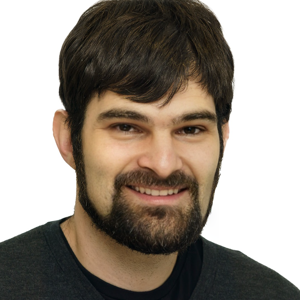
Ph.D., CEO, Founder, NeoSplice Tx
Biography
Evgeny Kiner is the founder of NeoSplice Therapeutics, an AI-driven platform company unlocking disease-specific therapeutic targets that are inaccessible to traditional genomics. He was trained in RNA biology at Massachusetts Institute of Technology under Phillip Sharp, and later in systems immunology at Harvard University with Diane Mathis and Christophe Benoist, where he helped bring single-cell RNA sequencing into large-scale immune profiling efforts as part of the Immgen consortium. He is the author of a highly cited Nature Immunology study that reshaped understanding of CD4 T-cell states. Prior to NeoSplice, he was a founding scientist at Immunai, where he helped build AI-driven platforms for biological discovery. Evgeny is passionate about expanding the druggable target space and accelerating the path from data to medicines using AI.
Talk
The Gene-Level Ceiling in AI Drug Discovery
NeoSplice applies AI, isoform-resolved sequencing, single-cell resolution, and proteogenomics to uncover and validate disease-specific proteoforms as novel therapeutic targets. By integrating patient-scale validation, cell-type specificity, protein evidence, and structural modeling, we enable discovery of actionable targets for next-generation antibody and T-cellbased therapies.
AI for Emerging Therapeutics Showcase:
NeoSplice Therapeutics
NeoSplice expands the universe of druggable targets by using AI, transcriptomics, and proteomics to uncover disease-specific proteoforms inaccessible to conventional genomics, thus enabling precision therapeutics.
Speaker Profile
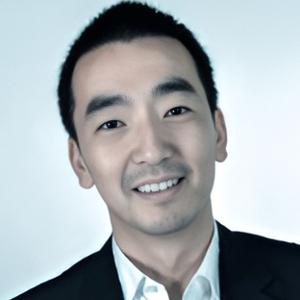
Ph.D., CEO, GaudiBio
Biography
Eric Wang, PhD, is CEO and Co-Founder of GaudiBio, a San Francisco–based biotechnology company developing the Gaudium™ system, an AI-enabled platform that integrates human tissue models and genomics to improve how new medicines are discovered and developed.
He has built his career at the intersection of genomics, data, and translational medicine, focused on creating technologies that translate research into real patient impact. Prior to GaudiBio, he helped develop a next-generation DNA sequencing platform at Omniome, later acquired by Pacific Biosciences, and played a key role in building the clinical bioinformatics platform at Ariosa Diagnostics before its acquisition by Roche, where it expanded into cancer diagnostics. Earlier, he contributed to cancer genomics platforms at Veracyte and worked in statistical genetics at Affymetrix, alongside biodefense research at SAIC.
Talk
Accelerating Rare Disease Discovery with Human-Biology Grounded AI Models
Devestating rare diseases remain untreated not for lack of data, but for lack of human-relevant models. GaudiBio integrates patient genomics, human iPSC-derived tissue systems, and AI into a continuously learning discovery engine, translating rare genetic insight into actionable therapeutic hypotheses faster, with greater biological confidence for patients who cannot afford to wait.
AI for Emerging Therapeutics Showcase:
GaudiBio
GaudiBio is unlocking the key to rare and ultra-rare diseases through human biology-grounded tissue models coupled with AI.
Speaker Profile

CEO, Tolka AI Tx
Biography
Johan is the CEO and Cofounder of Tolka AI, a company making personalized medicine for hard-to-treat infections. Trained as an engineer, he worked for many years at Google, where his work included commercializing early LLM technology in 2019, which landed over 500 million dollars of contracts. Founded Tolka in 2022 to solve the $1T dollar problem of hard-to-treat infections.
Talk
AI-Powered Platform For Personalized Phage Therapy
Phage therapy is supported by decades of clinical experience but has never achieved commercial scale due to the constraints of personalization. Tolka industrializes individualized treatment by automating laboratory workflows, replacing manual documentation with agentic AI, and deploying predictive models to inform selection and manufacturing.
AI for Emerging Therapeutics Showcase:
Tolka AI Therapeutics
Tolka AI builds a personalized medicine platform for hard-to-treat infections. We are backed by Khosla Ventures.