Speaker Profile
Biography
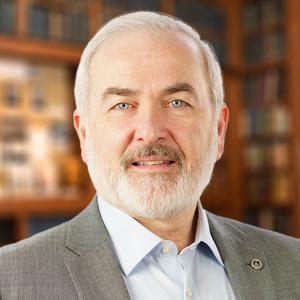
Prof. Adrian Krainer completed his undergraduate education at Columbia University in 1981, with a B.A. in Biochemistry. He then completed his Ph.D. in Biochemistry at Harvard University in 1986, in the lab of Prof. Tom Maniatis. After graduation, he became the first Cold Spring Harbor Fellow, and in 1989 he joined the faculty at Cold Spring Harbor Laboratory. He is currently the St. Giles Foundation Professor at CSHL, and the Deputy Director of Research of the CSHL Cancer Center. He is also a co-founder and Director of Stoke Therapeutics.
Adrian's lab at CSHL uses multidisciplinary approaches to elucidate pre-mRNA splicing mechanisms and alternative splicing regulation. An important goal is to apply this knowledge to uncover the roles of defective splicing in genetic diseases and cancer. The lab also uses antisense technology to develop novel therapeutics that target pre-mRNA or mRNA to modulate gene expression post-transcriptionally. One notable application—in collaboration with Ionis Pharmaceuticals and Biogen—was the development of the antisense oligonucleotide nusinersen (Spinraza), which became the first approved drug for spinal muscular atrophy, a severe genetic disease that causes motor-neuron degeneration. Research from the Krainer lab has also implicated splicing alterations in cancer, and his lab is currently pursuing antisense-therapeutic approaches in the context of various cancers.
Adrian is a recipient of the Albany Medical Center Prize in Medicine and Biomedical Research, the Wolf Prize in Medicine, the Life Sciences Breakthrough Prize, the RNA Society’s Lifetime Achievement Award, the Reemtsma Foundation International Prize in Translational Neuroscience, the Speiser Award in Pharmaceutical Sciences, the Ross Prize in Molecular Medicine, the Gabbay Award in Biotechnology and Medicine, the Takeda Pharmaceuticals Innovators in Science Senior Scientist Award in Rare Diseases, and the Watanabe Prize in Translational Research. He served as President of the RNA Society, and is a member of the National Academy of Sciences, the National Academy of Medicine, the National Academy of Inventors, and the American Academy of Arts & Sciences.
Session Abstract – PMWC 2027 Silicon Valley

Track Chair:
Catriona Jamieson, UC San Diego
PMWC Award Ceremony
• Emmanuelle Charpentier, Max Planck (J. Craig Venter Visionary Award · Nobel Laureate)
• Jay Bradner, Amgen (Pioneer)
• Adrian Krainer, Cold Spring Harbor Laboratory (Luminary)
• Randy Schekman, UC Berkeley (Nobel Laureate, Pioneer)
Featured Speakers
• Emmanuelle Charpentier, Max Planck
• Randy Schekman, UC Berkeley
• Jay Bradner, Amgen
• Adrian Krainer, Cold Spring Harbor Laboratory
• Alexis C. Komor, UC San Diego
• Nicole Gaudelli, GV
• Rachel Haurwitz, Caribou Bio
• Gene Yeo, UC San Diego
• Timothy Yu, Boston Children's / Harvard
• Shicheng Guo, Arrowhead Pharmaceuticals
• Mark A. Kay, Stanford
• Niren Murthy, UC Berkeley
• Ben Deverman, Broad Institute
• Stanley Crooke, n-Lorem / Ionis
Programming Protein Fate
Molecular glues, degraders, and induced proximity crossing into medicines.
Genome Editing Beyond the First Wave
Base, prime, and CRISPR-enabled editing moving from correction to clinic.
RNA Editing, Splice Modulation & Programmable RNA
RNA editing, ASOs, and splice modulation with chemistry already reaching patients.
In Vivo Delivery & Vector Engineering
AAV, LNP, and next-generation vectors that decide what is treatable.
From N-of-1 to Platform
Evidence, CMC, regulation, and access for individualized genetic medicines.
PMWC Hall of Impact
Previous Speakers Include
Nobel laureates, technology founders, regulators, CEOs and scientific pioneers who have taken the PMWC stage.