Session Abstract – PMWC 2027 Silicon Valley
The PMWC 2027 AI for Clinical Decision Support Showcase will provide a 15-30 minute time slot for selected organizations, including commercial companies, clinical testing labs, and medical research institutions, to present their latest advancements, insights, applications, and technologies to an audience of clinicians, leading investigators, academic institutions, pharma and biotech, investors, and potential clients. We will learn about new technologies and findings that promise expedited, cost-effective, and accurate clinical diagnosis for early disease detection, treatment decisions, and disease prevention.
Confirmed Presenting Companies:

Speaker Profile
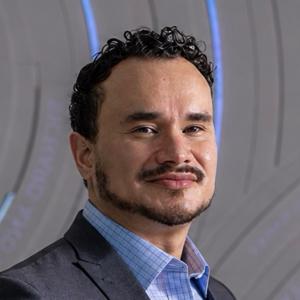
EngD, Director of Bioethics, Santa Clara U.
Biography
Guadalupe Hayes-Mota brings together artificial intelligence, biotechnology, and bioethics to address how medical innovation can better serve patients. His experience spans global biopharmaceutical operations, entrepreneurship, public policy, and education, including efforts to deliver medicines across 113 countries. His work examines how AI can advance drug discovery and precision medicine while addressing patient safety, bias, equitable access, and accountability. Through teaching, writing, and advising, he helps healthcare and biotechnology leaders translate ethical principles into practical decisions about developing and deploying emerging technologies. He focuses on ensuring that scientific breakthroughs earn public trust and reach the people who need them.
Talk
CARES: Turning AI Breakthroughs Into Trusted Medicines
Build breakthrough medicines. Earn patient trust. Guadalupe Hayes-Mota shows how his CARES framework brings clinical accuracy, equitable access, human oversight, data privacy, and social accountability into AI drug development. Leave with a practical approach to confronting bias, strengthening critical decisions, and putting patients at the center of innovation.
AI for Emerging Therapeutics Showcase:
Santa Clara University
Santa Clara University’s Markkula Center for Applied Ethics helps leaders turn ethical principles into practical decisions. Its Bioethics Program advances responsible innovation across health care, biotechnology, and AI, connecting patient safety, health equity, and accountability with the choices shaping tomorrow’s medicines.
Speaker Profile
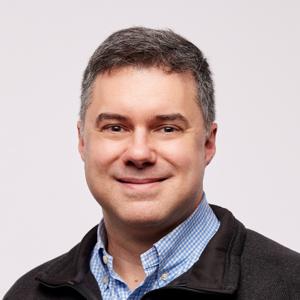
Ph.D., CEO and Co-Founder, Matterworks
Biography
Jack Geremia is a serial founder, company builder and executive, working at the intersection of the life sciences and machine learning. At Matterworks AI he is leading a team developing foundation models for predictive translation in drug discovery and development. Jack has spent more than 25 years in biotechnology and pharmaceutical R&D, including as co-founder and VP of R&D at Kaleido Biosciences, founder and CSO of Midori Animal Health, and Global Head of Discovery at DSM. He received his PhD in in chemistry from Princeton University and was a Gordon Moore Senior Postdoctoral Fellow in Information Science at the California Institute of Technology.
Talk
Foundation Models for Predictive Translation
The biochemome is the most proximal molecular readout of phenotype and the missing signal for predictive translation in drug development. AI foundation models, trained on >20 billion raw chemical spectra, quantify a compound’s direct biological response, distinguishing mechanism-driven bioactivity from on- and off-target toxicity in a single unbiased measurement.
AI for Emerging Therapeutics Showcase:
Matterworks, Inc.
Matterworks is a frontier AI company advancing predictive translation for drug discovery and development. Its spectral foundation models, delivered through its Pyxis co-scientist, read the biochemome from raw instrument data to help drug developers identify targets, flag safety liabilities earlier, and stratify patients.
Speaker Profile
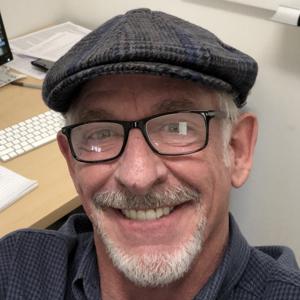
Ph.D., CEO, BrainStorm Tx
Biography
Robert Fremeau brings more than 20 years of neuroscience drug-development experience across academia and industry. As a Scientific Director at Amgen and CSO at Vyant Bio, he helped advance more than 10 CNS programs into clinical development. Earlier in his career, he held faculty appointments at Duke University Medical Center and the University of California, San Francisco. He has authored more than 65 peer-reviewed publications (H-index 46) and is an inventor on numerous patents. As CEO of BrainStorm Therapeutics, he advances human-relevant approaches to CNS drug discovery and builds strategic partnerships.
Talk
Predicting Human Efficacy Before Clinical Trials
BrainStorm combines patient-derived brain organoids with multimodal AI to discover treatments for brain diseases. The platform measures phenotypes across genetic epilepsies and neurodegenerative disorders, then experimentally tests AI-prioritized targets. Its translational promise is demonstrated by a Rett syndrome program that advanced from organoid screening to an IND-cleared Phase 2 trial.
AI for Emerging Therapeutics Showcase:
BrainStorm Therapeutics
BrainStorm Therapeutics combines patient-derived human brain organoids with multimodal AI to discover and validate treatments for brain diseases. After advancing a Rett syndrome program from organoid screening to an IND-cleared Phase 2 trial, the company is applying its platform to rare genetic epilepsies, Parkinson’s disease, and Alzheimer’s disease.
Speaker Profile
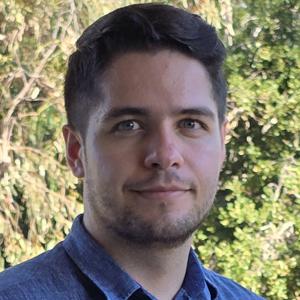
M.D., MPH, Co-Founder, Rabit AI
Biography
At Rabit AI, Amin Sadeghi leads the technical development of RABIT, a first-of-its-kind AI that gleans biological insights from health record data, and of its downstream applications, including biomarker discovery, patient stratification, and clinical trial optimization.
He originally co-developed this technology at Stanford University, and his research history spans both dry- and wet-lab work across machine learning, molecular pharmacology, neuropsychiatry, and oncology.
He draws on his training in medicine, public health, machine learning, and basic biology, along with his research experience, to lead the team in delivering insights that support clinical development, translational research, and precision medicine workflows in biopharma companies.
Talk
Reading Omics Profiles from the Medical Record
What if any real-world EHR cohort could be linked to omics data at every point in each patient’s clinical trajectory, without biosamples or assays, to discover biomarker candidates and clinical factors tied to any specific outcome? This talk shows how RABIT makes this possible.
AI for Emerging Therapeutics Showcase:
Rabit AI, Inc.
Rabit AI’s platform combines integrated EHR data, proprietary state-of-the-art EHR-native AI models, and technology bringing omics to EHR cohorts without biosamples, enabling biomarker discovery, retrospective trial analysis, higher probability of success for upcoming trials without shrinking the ITT population, combination therapy evaluation, and more.
Speaker Profile
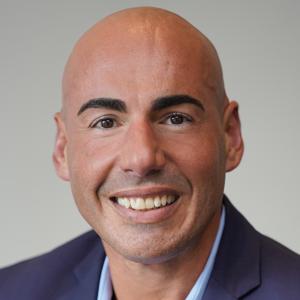
M.D., Ph.D., MBA, Vitreoretinal Surgeon-Scientist, ClinOmicsAI
Biography
Dr. David R.P. Almeida is a distinguished vitreoretinal surgeon and clinical scientist recognized for his extensive contributions to ophthalmic research and innovative patient care. He serves as the Founder and Executive Chairman of Almeida Pharma and The Centers for Advanced Surgical Exploration (CASEx), where he leads pioneering international clinical research initiatives. His primary research interests include precision arbitrage in age-related macular degeneration, diabetic eye disease, and advancing techniques in complex vitreoretinal surgery.
A prolific and respected thought leader, Dr. Almeida has authored over 270 peer-reviewed publications and delivered more than 200 presentations at major medical conferences worldwide. He has served as the Principal Investigator for over 140 clinical trials across all phases of development.
Talk
The Eye as a Liquid Biopsy Window
A 100-microliter aqueous humor tap yields a proteome that reads systemic and ocular disease in real time. Across 60+ trials at Erie Retina Research, ClinOmicsAI pairs that signal with imaging and AI to monitor gene therapy expression, GLP-1 effects and treatment response, moving precision ophthalmology from discovery to clinic.
AI for Emerging Therapeutics Showcase:
ClinOmicsAI
Precision Proteomics
Speaker Profile
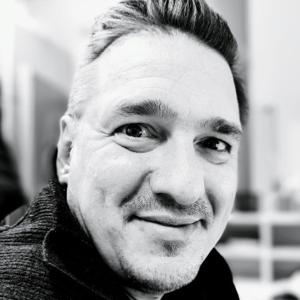
Ph.D., Founder & CEO, ImmuNovus
Biography
Tomas Helikar has spent more than 15 years building multi-scale models of the immune system (immune digital twins), from inside cells to virtual patient populations, a head start that is slow to reproduce. That work underpins a comprehensive immune core that can be rapidly extended to many of the 400+ immune diseases as modules. Earlier immune models identified drug repurposing candidates for multiple sclerosis, rheumatoid arthritis and primary biliary cholangitis and identified treatment combinations for influenza, with leads tested in cell experiments and are now progressing to animal studies. He is the founder and CEO of ImmuNovus, a company he founded to accelerate the translation of his academic work at the University of Nebraska-Lincoln where he is Eberhard Professor in the Department of Biochemistry, and founder of the Digital Twin Innovation Hub. His academic lab has been funded by NIH, NSF and DoW.
Talk
AI Meets Mechanism with Immune Digital Twins
Every patient's complex immune network is different, so the same drug helps some and fails others. Our mechanistic immune models scale quickly across diseases, from psoriasis and IBD to transplant and infectious diseases, giving AI an explainable layer to ask why patients respond, how drugs compare, and which markers might flag responders.
AI for Emerging Therapeutics Showcase:
ImmuNovus, Inc.
ImmuNovus builds an AI-enabled mechanistic immune digital twin, run across virtual patients and built on our published core immune model. It gives pharma and biotech I&I teams an explainable mechanism layer alongside pattern-based AI, simulating how a drug might work across the immune system versus alternatives, explaining why, proposing candidate responder markers and, as disease modules are added, indication priorities.
Davos of Precision Medicine
PMWC 2027 Program
January 27–29, 2027 · Santa Clara Convention Center

Swipe speakers · Tap a card for sessions →
In a few words.
PMWC is indeed The Davos of Biotech